Charles Quincy Ascher Einstein: Exploring the Story, Speculation, and Historical Curiosity

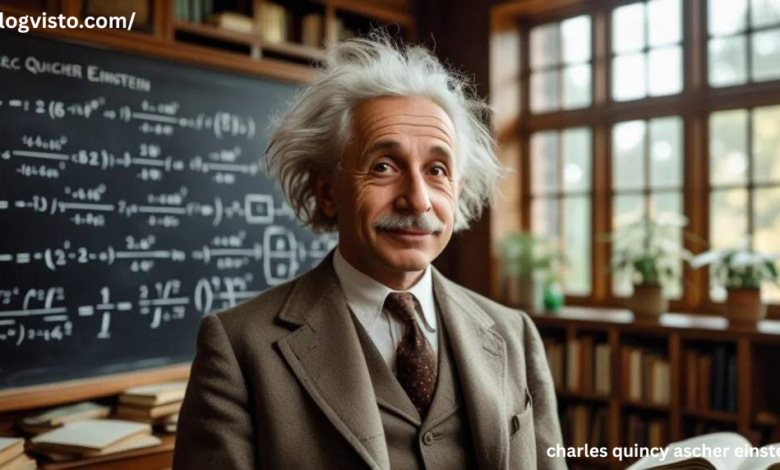
The keyword charles quincy ascher einstein has sparked curiosity among researchers, historians, and online readers who are interested in genealogy, historical connections, and the legacy of the Einstein name. While the name appears to connect two distinct identities, it has generated discussion about possible links, family histories, and the broader fascination surrounding the Einstein surname.
In this concise yet informative article, we will explore what is known about the name, clarify historical context, and examine why the keyword continues to attract attention.
Who Is Charles Quincy Ascher Einstein?
The name charles quincy ascher einstein does not correspond to a widely recognized historical figure in academic records. Instead, it appears to combine elements of two separate names:
- Charles Quincy Ascher
- Albert Einstein
This blending of names has led to speculation about possible relationships or historical associations. However, there is no verified historical documentation confirming a direct familial or professional connection between a person named Charles Quincy Ascher and the world-renowned physicist Albert Einstein.
Understanding the Einstein Legacy
Any discussion involving the surname Einstein naturally brings attention to Albert Einstein, one of the most influential scientists in modern history.
Albert Einstein’s Global Impact
Albert Einstein is best known for:
- Developing the theory of relativity
- Introducing the famous equation E = mc²
- Receiving the Nobel Prize in Physics in 1921
- Shaping modern theoretical physics
Because of his immense fame, many individuals who share the Einstein surname often become subjects of public interest, whether related or not.
Charles Quincy Ascher: A Separate Identity
Historical references indicate that Charles Quincy Ascher was a professional figure in the 20th century, particularly associated with public administration and research. However, he was not scientifically linked to Einstein’s work in physics.
There is no verified archival evidence suggesting:
- A blood relation
- A formal collaboration
- A shared research initiative
The merging of these names likely stems from online searches, genealogical curiosity, or mistaken identity.
Why the Keyword Charles Quincy Ascher Einstein Appears Online
There are several possible reasons the keyword charles quincy ascher einstein appears in online searches:
1. Genealogical Research Interest
People frequently search for connections to famous historical figures. Because the Einstein surname carries significant prestige, researchers sometimes investigate potential family ties.
2. Name Confusion
It is common for digital databases and search engines to merge separate names due to:
- Similar search queries
- Indexing overlaps
- Aggregated data listings
This may create the appearance of a single combined identity.
3. Curiosity Around the Einstein Family
The Einstein family itself has documented members, including:
- His first wife Mileva Marić
- His second wife Elsa Einstein
- His sons Hans Albert Einstein and Eduard Einstein
None of these records reference Charles Quincy Ascher as a relative.
Historical Context and Documentation
Reliable historical research relies on:
- Academic archives
- Genealogical records
- University documentation
- Published biographies
Major biographies of Albert Einstein do not list any association with Charles Quincy Ascher.
This absence suggests that the keyword reflects either digital data merging or modern curiosity rather than historical fact.
The Power of a Famous Surname
The Einstein name has become synonymous with genius. Over time, the surname has:
- Entered popular culture
- Been used metaphorically to describe intelligence
- Attracted genealogical speculation
As a result, any name appearing alongside Einstein can gain unexpected attention.
Clarifying Misconceptions About Charles Quincy Ascher Einstein
To summarize clearly:
- There is no documented evidence linking Charles Quincy Ascher to Albert Einstein.
- The combined name appears to be a modern keyword or search query.
- Historical records treat both identities separately.
Careful research helps avoid misinformation and confusion.

Why Accurate Historical Research Matters
In the digital age, information spreads quickly. Without verified sources, name combinations like charles quincy ascher einstein can create assumptions that appear credible but lack evidence.
Researchers and readers should:
- Cross-check reliable archives
- Consult academic biographies
- Avoid relying solely on search engine results
Conclusion
The keyword charles quincy ascher einstein reflects modern curiosity rather than a confirmed historical identity. While Charles Quincy Ascher appears to have been a professional figure in public administration, and Albert Einstein remains one of history’s greatest physicists, no credible documentation connects the two.
Understanding historical figures requires careful attention to verified records. In this case, the evidence indicates that the name represents a search-based association rather than a documented relationship.
By approaching such topics thoughtfully, readers can distinguish between speculation and established history, ensuring accurate and responsible understanding of the past.