
Software performance issues can quickly disrupt development workflows, especially when they affect build processes, deployment cycles, or runtime execution. One such concern developers encounter is python sdk25.5a burn lag. While not a widely documented mainstream issue, the term generally refers to performance slowdowns, high CPU usage, or delayed processing during SDK operations, compilation steps, or resource-intensive tasks.
This article provides a clear and practical overview of python sdk25.5a burn lag, including its possible causes, warning signs, and actionable solutions.
Understanding Python SDK25.5A Burn Lag
The phrase python sdk25.5a burn lag typically describes performance degradation occurring when using a specific SDK version (25.5A) in Python-based environments. “Burn” often refers to excessive CPU or system resource usage, while “lag” indicates noticeable delays in execution or response time.
This issue may surface during:
- Build and deployment tasks
- Continuous integration pipelines
- Data processing scripts
- Automation workflows
- High-load backend services
Developers usually detect it through sluggish execution, system overheating, or extended compilation times.
Common Causes of Python SDK25.5A Burn Lag
Several technical factors can contribute to python sdk25.5a burn lag.
1. Inefficient Resource Allocation
If the SDK consumes excessive memory or CPU resources, it may overwhelm lower-end systems or virtual environments. Poor garbage collection handling or unmanaged memory growth can intensify the problem.
2. Dependency Conflicts
Version mismatches between SDK25.5A and third-party Python libraries can create hidden inefficiencies. Conflicts often lead to repeated retries, background errors, or redundant computations.
3. Threading and Concurrency Bottlenecks
Improper use of threading or multiprocessing may cause CPU spikes. If background tasks are not optimized, they may compete for system resources and produce lag.
4. Large File or Data Handling
SDK operations that process large datasets without batching or streaming techniques can cause noticeable slowdowns.
5. Debug Mode Overhead
Running applications in verbose or debug mode can significantly increase logging output and CPU usage, which may resemble burn lag behavior.
Symptoms of Python SDK25.5A Burn Lag
Recognizing the issue early helps prevent deeper performance complications.
Typical signs include:
- CPU usage consistently above 80–90%
- Memory usage growing steadily without release
- Slow build or packaging times
- Delayed API responses
- System fan noise or overheating
- Long execution times for simple tasks
If these symptoms appear only after upgrading to SDK25.5A, the SDK version itself may be contributing to inefficiencies.
Diagnosing Python SDK25.5A Burn Lag
Before applying fixes, proper diagnosis is essential.
Monitor System Resources
Use tools like:
- Task Manager (Windows)
- Activity Monitor (macOS)
toporhtop(Linux)
These tools help identify whether CPU, memory, or disk usage is causing the lag.
Profile Python Code
Python provides profiling tools such as:
cProfileline_profilermemory_profiler
Profiling helps pinpoint specific functions or SDK calls responsible for excessive resource consumption.
Check SDK Configuration
Review:
- Logging level
- Cache settings
- Parallel execution options
- Background services
Incorrect configuration can amplify performance problems.
Fixing Python SDK25.5A Burn Lag
Once identified, several strategies can reduce or eliminate the issue.
Optimize Code Execution
Refactor inefficient loops, redundant computations, and blocking operations. Consider:
- Using generators instead of large in-memory lists
- Implementing batching for large data processing
- Reducing unnecessary API calls
Adjust Logging Levels
If verbose logs are enabled, switch to a production logging level. Excessive logging significantly slows execution.
Update Dependencies
Ensure all libraries are compatible with SDK25.5A. Outdated dependencies often create performance inefficiencies.
Limit Parallel Threads
Excessive concurrency can overwhelm system resources. Configure thread pools carefully and test different concurrency limits.
Enable Caching
If the SDK supports caching mechanisms, enable them to avoid repeated expensive operations.
Preventing Future Python SDK25.5A Burn Lag Issues
Prevention is more efficient than repeated troubleshooting.
1. Test in Staging Environments
Always evaluate new SDK versions in a controlled environment before deploying to production.
2. Use Performance Benchmarks
Create benchmark tests to measure execution time before and after SDK upgrades.
3. Monitor Continuously
Implement monitoring tools such as:
- Prometheus
- Grafana
- Application Performance Monitoring (APM) tools
Continuous monitoring allows early detection of performance anomalies.
4. Apply Incremental Updates
Instead of large version jumps, update dependencies gradually to identify compatibility issues early.
When to Consider Downgrading
If optimization efforts do not resolve python sdk25.5a burn lag, temporarily reverting to a stable SDK version may be a practical short-term solution. However, this approach should be paired with ongoing investigation to ensure long-term stability.
Before downgrading:
- Review release notes
- Check known issues in developer forums
- Confirm whether patches or minor updates are available
Performance Best Practices for Python SDK Environments
Even beyond SDK25.5A, the following practices improve overall system stability:
- Use virtual environments to isolate dependencies
- Keep Python updated to a stable release
- Avoid unnecessary background services
- Optimize database queries
- Regularly clean temporary build files
Maintaining a clean development environment significantly reduces the risk of burn lag scenarios.
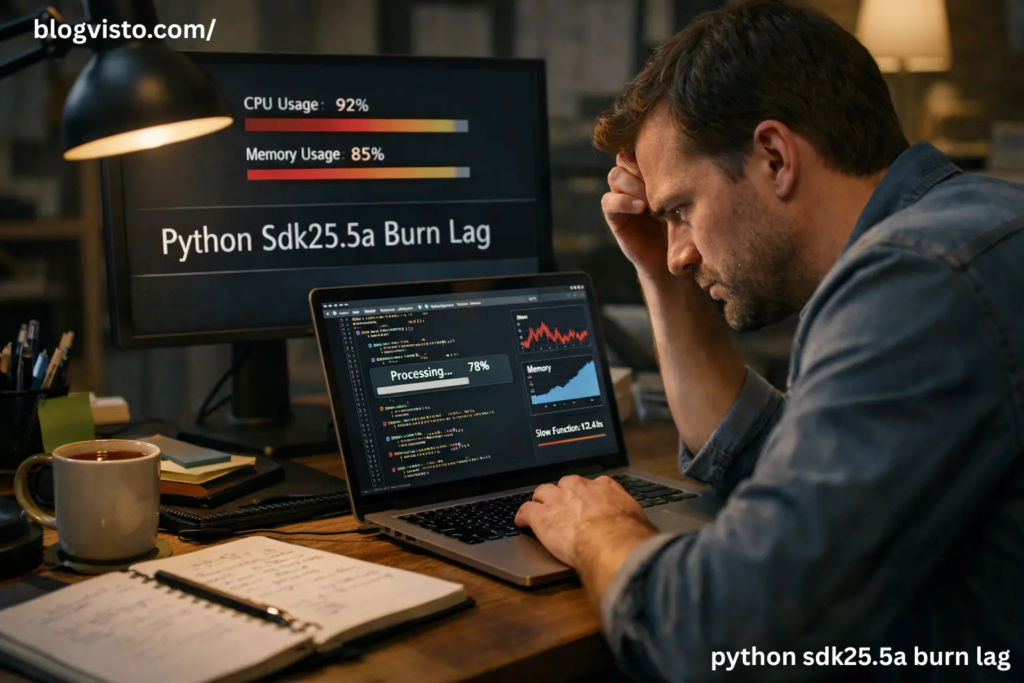
Real-World Example Scenario
Consider a backend automation script that previously executed in 5 seconds. After upgrading to SDK25.5A, execution increases to 20 seconds, and CPU usage spikes.
Upon profiling, developers discover:
- Debug logging enabled
- Redundant data validation loops
- Unoptimized concurrency settings
By disabling verbose logs, restructuring loops, and limiting threads, execution time drops back to near-original performance levels.
This illustrates how python sdk25.5a burn lag is often a combination of configuration and code inefficiencies rather than a single fatal flaw.
Conclusion
Python sdk25.5a burn lag represents performance slowdowns linked to SDK configuration, dependency conflicts, resource mismanagement, or inefficient code patterns. While it may appear severe due to high CPU usage and execution delays, systematic diagnosis and optimization typically resolve the issue.
By profiling applications, managing concurrency carefully, updating dependencies responsibly, and maintaining clean environments, developers can prevent and mitigate burn lag effectively. Performance stability ultimately depends on proactive monitoring, thoughtful configuration, and disciplined coding practices.